A heat branding stamp is a custom metal die, heated electrically or over a flame, that burns your logo into food, leather or wood in a single press. Restaurants use it on burger buns and steaks, bakeries on bread, leather makers on wallets and bags, and gift companies on wooden boxes. This guide explains how it works on each material, the difference between electric and manual stamps, how to design a logo that brands cleanly, and what it costs in Dubai.
What Is a Heat Branding Stamp?
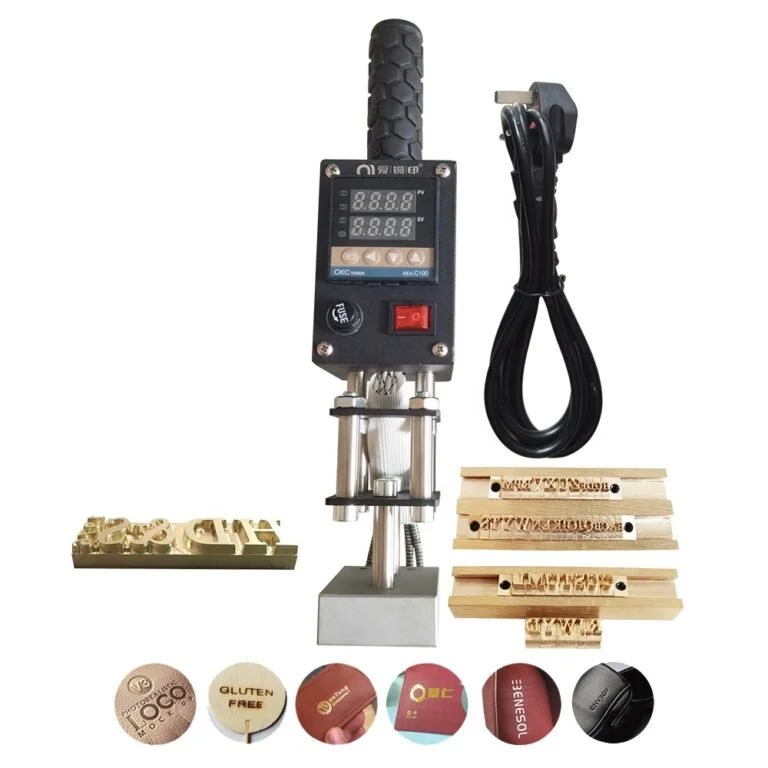
A heat branding stamp — also called a branding iron or hot stamp — has two parts: a brass or stainless-steel die engraved with your design, and a handle that either heats the die electrically or lets you heat it over a flame. When the hot die touches the surface, it scorches or caramelises the raised parts of your design into the material, leaving a permanent brown mark.
There is no ink involved. The colour comes from the material itself reacting to heat: the sugars in a bun caramelise, wood fibres darken, and vegetable-tanned leather turns a rich brown. That is why branded products look natural and premium rather than printed.
Heat branding is different from chocolate stamps pressed into chocolate at room temperature, and from ice stamps that melt a logo into ice cubes — though the same brass dies are often used across these applications.
Electric vs Manual Heat Stamps
| Electric heat stamp | Manual heat stamp | |
|---|---|---|
| Price | From AED 1,200 | From AED 650 |
| Heat source | Built-in element, UAE 220V plug | Gas burner, kitchen torch or open flame |
| Temperature | Adjustable controller, up to 200°C | Judged by testing on scrap |
| Heat-up time | About 3–5 minutes | A few minutes over the flame, reheat between batches |
| Die sizes | 1–4 inch, round, square or custom | 1–3 inch, custom shapes |
| Best for | Daily production, kitchens, workshops | Occasional use, events, artisans |
Choose electric if you brand every day or need every impression to look identical — a restaurant branding 300 buns a night, or a leather workshop with steady orders. The thermostat keeps the die at the same temperature, so impression 1 and impression 300 match. Electric handles also take interchangeable dies, so one handle can carry your main logo, a seasonal design and a client's logo.
Choose manual if you brand occasionally, work at outdoor events without power, or want a deliberately rustic look. It costs less, but you control the temperature by eye and by testing, so results vary more from piece to piece.
Branding Food: Buns, Bread, Steak and Chocolate
Food branding has become a signature move for Dubai's burger restaurants, steakhouses, bakeries and hotel brunches. A logo burned into a bun top or a steak looks crafted rather than printed, and it photographs well — every branded plate is a small advert on a guest's Instagram story.
Food-safe dies
Dies for food are made from food-grade stainless steel or uncoated brass, both suitable for direct food contact. Keep a food die for food only — never use the same die on leather or wood and then on food.
What brands well
- Burger buns and brioche — the classic. The sugars caramelise quickly into a dark, clear logo. A short, light touch is enough.
- Bread and flatbreads — artisan loaves, pita and sandwich bread. Brand after baking for the cleanest mark.
- Steak and grilled meat — a firm, brief press on the seared surface.
- Pancakes, waffles and cookies — popular for brunch menus and corporate events.
- Chocolate — a warm die can melt a design into the surface for a smooth, moulded look; for set chocolate at room temperature a pressed chocolate stamp is often the better tool.
Branding Leather
Heat branding gives leather goods a permanent maker's mark: wallets, belts, bag tags, notebook covers, coasters and corporate gifts. In Dubai we see strong demand from small leather brands and from companies personalising gifts for Ramadan, National Day and year-end.
- Use vegetable-tanned leather where you can. It darkens beautifully under heat and holds a crisp edge.
- Chrome-tanned leather can brand, but the result is lighter and less predictable — always test on an offcut.
- Avoid synthetic "PU" leather. It melts instead of branding and can stick to the die.
- Lower heat, slightly longer press gives a cleaner result on leather than a very hot, quick touch, which tends to scorch the edges.
Some makers also look for "hot foil" leather stamping, which adds gold or silver colour. That uses a separate foil and machine process; plain heat branding gives the natural, debossed brown mark.
Branding Wood and Packaging
Wood is one of the most forgiving materials to brand, and one of the most popular in the UAE gift market. Think wooden boxes for dates, oud and perfume, serving boards, coasters, crates for hampers, handmade furniture and wooden toys.
- Hardwoods with fine grain (beech, maple, walnut) give the sharpest detail.
- Soft or open-grained woods (pine, some MDF) brand quickly but can blur fine lines — use a simpler design.
- Cork, bamboo and MDF all brand well and suit packaging and promotional items.
- Brand before varnishing or oiling. Finishes can smoke or bubble under heat.
Heat branding also works on soap and candles, which is why many small cosmetics brands use one die for both their products and their wooden packaging.
Designing a Logo That Brands Well
Heat does not behave like ink. It spreads slightly into the material, so details that look perfect on screen can fill in on a bun or a piece of pine. Before engraving, we review every design and suggest changes, but these guidelines help you get it right first time:
- Keep lines at least about 1mm thick. Hairlines disappear or break up.
- Keep text at least 4–5mm tall and use bold, simple fonts. Thin serif fonts struggle, especially on food.
- Leave space between elements. Gaps narrower than about 1mm tend to burn together.
- Simplify for soft surfaces. A bun is soft and uneven, so a bold logo mark often works better than a full logo with a tagline.
- Remember the mirror image. The die is engraved in reverse so the brand reads correctly — we handle this, but check it on your proof.
- Arabic lettering works well when the strokes are bold enough. Bilingual dies are common for UAE brands.
Send us your logo as a vector file (AI, EPS, SVG or PDF) if you have one; a sharp PNG also works. You will receive a proof at actual size before anything is engraved.
Get Your Logo Turned Into a Branding Stamp
Send your logo and tell us what you want to brand — buns, leather or wood. We will check the design and send a free proof.
💬 Send Your Logo on WhatsAppUsing a Heat Stamp Safely
- Always test on scrap first — an offcut of leather, a spare bun or a waste piece of wood — every time you start a session.
- Use the stand. Rest the hot stamp on its stand or a heat-proof surface, never directly on a counter.
- Keep it away from staff traffic in busy kitchens, and let it cool fully before storing.
- With manual stamps, heat only the brass head, not the wooden handle, and work in a ventilated area.
- Unplug electric stamps after use and allow them to cool before changing dies.
Prices and How to Order in Dubai
Heat branding stamps from Digital Stamp Maker start from AED 650 for a manual stamp and from AED 1,200 for an electric stamp with temperature controller, each with your custom brass die. Food-safe chocolate stamps start from AED 200. Additional dies for an electric handle can be ordered separately.
- Send your logo and tell us the material and the size you want to brand.
- We check the artwork and suggest any simplification for clean branding.
- Approve the proof at actual size.
- We engrave the die — custom dies are typically ready in 3–5 business days after approval.
- Collect from Al Barsha or get UAE-wide delivery.
See full specifications on our electric heat stamp and manual heat stamp pages, or browse all branding stamps including soap, clay and ice stamps.
FAQ: Heat Branding Stamps
What materials can a heat stamp brand?
Leather, wood, cork, MDF, bamboo, bread, burger buns, chocolate, soap, candles, rubber and most other heat-tolerant materials. Synthetic "PU" leather and most plastics melt rather than brand, so test first.
Is a heat branding stamp safe for food?
Yes, when the die is made for food contact. We make food-branding dies in food-grade stainless steel or uncoated brass, and they should be kept only for food use and cleaned between sessions.
Should I choose an electric or manual heat stamp?
Choose electric (from AED 1,200) for regular production — it holds a steady temperature up to 200°C. Choose manual (from AED 650) for occasional use, outdoor events or a rustic look, heating the brass head over a gas flame.
Can I use one handle with different logos?
Yes. Our electric handles take interchangeable brass dies, so you can order extra dies for different logos or seasonal designs and swap them on the same handle.
How small can the lettering be on a heat stamp?
Heat spreads into the material, so very fine detail fills in. As a guide, keep lines at least about 1mm thick and text at least 4–5mm tall, and simplify logos for soft surfaces like bread. We check your artwork and suggest changes before engraving.