Use a heat stamp when you want to brand the product itself — burger buns, bread, chocolate, leather or wood — because it burns your logo permanently and can be food-safe. Use a wax seal when you want to brand and close the packaging — boxes, bags, wraps and bottles — for a luxurious unboxing. Many food and gift brands in the UAE use both: heat on the product, wax on the box. Here is how they compare.
The Short Answer
- Branding the food itself? Heat stamp (with a food-safe die).
- Branding leather or wood? Heat stamp.
- Closing and decorating paper packaging? Wax seal.
- Luxury gift presentation? Wax seal — or both together.
- Hundreds of pieces a day? Heat stamp for products; wax seal stickers for packaging.
How Each One Works
Heat stamp
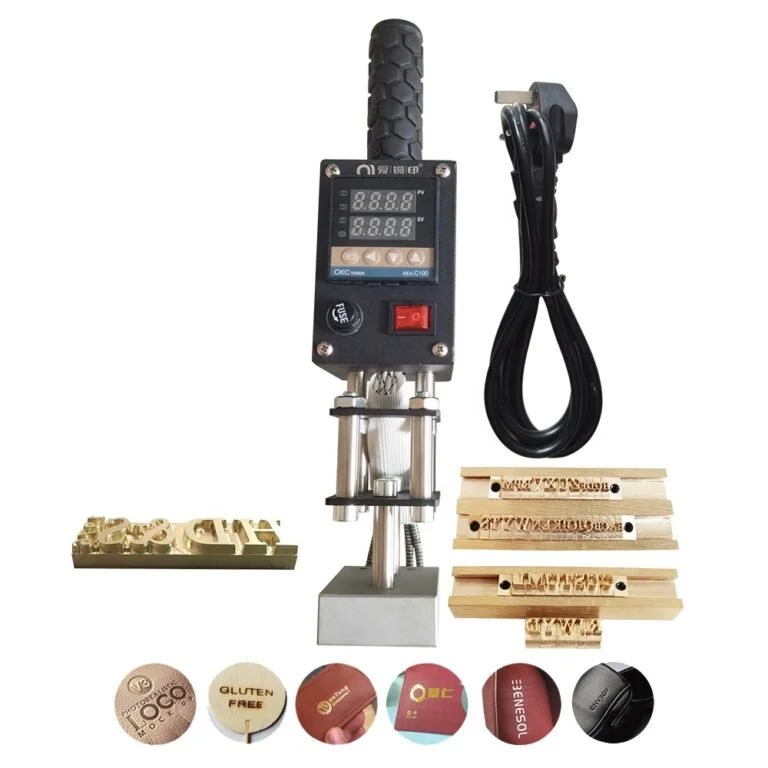
A custom brass or stainless-steel die is heated — electrically or over a flame — and pressed onto the surface. The heat darkens or caramelises the material, leaving a permanent brown mark. No ink, no added material. It works on anything that browns under heat: bread, buns, steak, chocolate, leather, wood, cork, soap and candles. Read the full heat branding stamp guide for details on each material.
Wax seal
Sealing wax is melted onto paper, card, ribbon or a tag, and a brass stamp is pressed into it to leave a raised impression of your design. The result is a coloured, three-dimensional seal that sits on top of the packaging. It can also close the package — and show if it has been opened.
Side-by-Side Comparison
| Heat stamp | Wax seal | |
|---|---|---|
| Direct food contact | Yes with food-safe dies | No — outer packaging only |
| Leather and wood | Yes | No |
| Paper packaging | Possible on rigid board | Yes — ideal |
| Look | Natural brown, burned-in, rustic | Colourful, raised, luxurious |
| Permanence | Permanent | Sits on the surface; breaks when opened |
| Speed | A few seconds per piece | About 30–60 seconds by hand; seconds with stickers |
| Running cost | Electricity or gas only | Wax per seal, or stickers per piece |
| Starting price | Manual from AED 650; electric from AED 1,200 | Stamp from AED 150; stickers from AED 2.5 each |
For Food Businesses
For restaurants, cafés and bakeries, the decision is usually simple: to put your logo on the food, you need a heat stamp. Sealing wax is not made to touch food.
- Burger restaurants: a logo on the bun top — the most photographed branding in the city's burger scene.
- Bakeries: branded loaves, buns and pastries; plus wax seals on the bakery box.
- Steakhouses: a brand on the steak or on wooden serving boards.
- Chocolatiers: a pressed chocolate stamp on the chocolate, and a wax seal on the gift box.
- Cocktail bars: an ice stamp for logos in ice cubes.
Food dies are made from food-grade stainless steel or uncoated brass and should be kept for food use only.
Not Sure Which One Your Brand Needs?
Tell us what you sell, how you package it and how many pieces a day — we will recommend heat, wax or both, and prepare your logo for each.
💬 Ask Us on WhatsAppFor Packaging and Gifts
For packaging, wax seals usually win. They close the package, add colour and texture, and create the moment of breaking the seal that makes unboxing memorable.
- Gift boxes and hampers: wax seal on the ribbon or lid.
- Perfume, oud and honey bottles: wax seal on the cap, ribbon or tag.
- Boutique fashion: wax seal on the tissue wrap inside the box.
- Wooden gift boxes (dates, oud, hampers): here the heat stamp shines — brand the wood itself, then add a wax seal on the ribbon.
For more ideas and a guide to bottles, see wax seals for packaging and bottles.
How Customers See Each One
The two tools send different messages, so think about the feeling you want your brand to create:
- Heat branding says "crafted". A burned-in logo feels artisan, rustic and authentic — it suits burger joints, bakeries, barbecue, leather workshops and wooden goods. Because it is part of the product, it also proves where the product came from.
- A wax seal says "special". Colourful, raised and tactile, it feels like an invitation or a gift. It suits luxury packaging, perfume, sweets, stationery and anything meant to be opened with a little ceremony.
Customers also photograph both. A branded bun on a plate and a wax-sealed box on a table are two of the most shared images in food and gifting on social media — free advertising every time a customer posts.
Durability
A heat brand lasts as long as the surface: forever on leather and wood, until the bun is eaten. A wax seal is designed to be broken when the package is opened — that moment is part of its appeal. If you need a mark that survives handling and shipping, heat branding on the product or rigid packaging is the more durable choice.
One more practical point: heat branding is part of the product, so it cannot be removed or swapped. A wax seal sits on the packaging, so you can change colours or designs for every campaign without changing the product at all.
Using Both Together
The strongest presentations often combine them. Combinations that work well:
- Bakery: heat-branded loaf inside a paper bag closed with a wax seal.
- Date and sweets gifting: heat-branded wooden box lid, wax-sealed ribbon around it.
- Leather goods: heat-branded product, wax-sealed tissue wrap and thank-you card.
- Burger delivery: heat-branded buns, and wax seal stickers to close the delivery bag.
We can prepare one logo for both tools, adjusting line thickness for each: bolder for the heat die, finer where wax allows.
What They Cost Over a Year
The upfront price is only part of the picture. Consider a small bakery that brands 200 items a week:
- Electric heat stamp: from AED 1,200 once. After that, only electricity — no material per piece. Over a year of steady use, the cost per branded item becomes very small.
- Hand-poured wax seals: a stamp from AED 150 once, plus wax — roughly one stick (from AED 10) per 15–25 seals. At 200 seals a week, that is around 8–13 sticks a week.
- Wax seal stickers: from AED 2.5 each with your design. No labour for pouring — the cost is per piece, but staff time drops to seconds per package.
The right choice depends on what you are branding and how much staff time matters. For branding the product itself, the heat stamp pays back quickly. For packaging, compare wax and sticker costs against the time your team spends sealing.
Skills and Set-Up Needed
- Heat stamp: a heat-safe stand, a socket (electric) or gas burner (manual), and a few test pieces to find the right timing. Once set, anyone on the team can brand consistently.
- Wax seals: a glue gun or melting spoon, a cool surface for the stamp and some practice. Results vary slightly from seal to seal — which many brands see as part of the charm.
- Wax seal stickers: no skill or equipment at all.
Hygiene and Safety Notes
- Keep food heat-stamp dies for food only, and clean them between sessions.
- Keep sealing wax away from food preparation areas; seal boxes at a separate packing table.
- Never leave a hot heat stamp or glue gun unattended, and use the stands provided.
- Let sealed packages cool fully before boxing them together, so seals do not stick or deform.
Quick Decision Guide
| If you want to… | Choose |
|---|---|
| Put your logo on buns, bread, steak or chocolate | Heat stamp (food-safe die) |
| Brand leather goods or wooden boxes | Heat stamp |
| Close and decorate boxes, bags and wraps | Wax seal |
| Seal hundreds of packages a week | Wax seal stickers |
| Create a premium gift presentation | Both |
See all options: branding stamps (heat, chocolate, ice, soap and clay) and wax seal stamps, kits and stickers.
FAQ: Heat Stamps vs Wax Seals
Can wax seals be used on food?
Not directly. Sealing wax belongs on outer packaging — boxes, bags, wraps and labels. To put your logo on the food itself, use a food-safe heat branding stamp.
Are heat stamps food-safe?
Yes, when the die is made for food. We make food-branding dies in food-grade stainless steel or uncoated brass, suitable for direct food contact.
Which is cheaper, a heat stamp or a wax seal stamp?
A custom wax seal stamp starts from AED 150, a manual heat stamp from AED 650 and an electric heat stamp from AED 1,200. Wax seals also need wax for each seal; heat stamps have no running material cost.
Which is faster for high volumes?
Heat stamping takes only a few seconds per piece once the stamp is hot. Hand-poured wax seals take longer, so for hundreds of packages a day, heat stamps or wax seal stickers are more practical.
Can I use the same logo for both?
Yes. We can prepare your logo for both a heat stamp die and a wax seal, adjusting line thickness for each so it brands cleanly on food and stamps clearly in wax.